
The modern college experience is often a high-stakes race against the clock. Between back-to-back lectures, extracurricular commitments, and the looming shadow of midterms, students are constantly looking for ways to extend their cognitive endurance. However, the common reliance on sugary energy drinks and highly processed snacks often leads to the dreaded “sugar crash” just when focus is needed most. True academic stamina isn’t found in a can; it is built in the kitchen. By understanding the relationship between glycemic index, omega-3 fatty acids, and neurotransmitter synthesis, you can create a meal that acts as high-octane fuel for your brain.
Achieving a “flow state” during a grueling three-hour study session requires more than just willpower; it requires a steady supply of glucose to the brain. When you are deep into a complex research project, the temptation to cut corners on self-care is high. This is precisely why many students turn to professional assignment help websites like myassignmenthelp to manage their academic burdens while they focus on mastering their physical health and lifestyle balance. Integrating a nutrient-dense “Brain-Power Bowl” into your routine ensures that your biological systems are just as prepared as your digital ones. By front-loading your day with complex carbohydrates and healthy fats, you prevent the mental fog that typically sets in halfway through a library marathon.
The Science of Cognitive Nutrition
To understand why specific foods help you study, we have to look at how the brain consumes energy. While the brain only accounts for about 2% of your body weight, it consumes roughly 20% of your daily calorie intake. During intensive cognitive tasks—like solving calculus or writing a 2,000-word essay—your neurons are firing at a rapid rate, demanding a constant stream of fuel.
If you eat simple sugars (like a candy bar), your blood glucose spikes and then plummets. This “hypoglycemic dip” triggers the release of stress hormones like cortisol, which makes you feel anxious and distracted rather than focused. In contrast, the ingredients in a Brain-Power Bowl are selected for their ability to provide “sustained release” energy.
The Anatomy of a Brain-Power Bowl
To build a meal that supports intensive cognitive labor, you must look at your plate as a chemical formula for focus. A successful brain-power bowl relies on four distinct pillars: complex bases, lean proteins, neuro-nutritive fats, and antioxidant-rich “spark plugs.”
| Component | Example Ingredients | Primary Brain Benefit |
| Complex Base | Quinoa, Farro, Brown Rice, Sweet Potato | Steady glucose supply; prevents the “afternoon slump.” |
| Lean Protein | Salmon, Tofu, Chickpeas, Tempeh | Provides amino acids for dopamine (motivation) and serotonin (mood). |
| Healthy Fats | Avocado, Walnuts, Hemp Seeds, Olive Oil | Builds brain cell membranes and reduces neuro-inflammation. |
| Micronutrients | Spinach, Blueberries, Turmeric, Pumpkin Seeds | Protects neurons from oxidative stress and improves memory recall. |
- The Base: Instead of white rice or pasta, which cause rapid insulin spikes, choose quinoa or farro. These ancient grains have a low glycemic index, meaning they release energy slowly over several hours.
- The Protein: Wild-caught salmon or chickpeas provide the amino acids necessary for the production of dopamine and norepinephrine—the chemicals in your brain responsible for alertness and motivation.
- The Fats: Your brain is nearly 60% fat. Adding half an avocado or a handful of crushed walnuts provides the omega-3s required for maintaining the structural integrity of your brain cells.
- The Spark Plugs: Leafy greens like spinach contain lutein, which has been linked to improved crystalline intelligence and the ability to learn new information quickly.
Efficiency in the Kitchen: The 15-Minute Method
The biggest barrier to healthy eating in university is the perception that it takes too much time. However, with a “minimalist prep” mindset, you can assemble a world-class meal in less time than it takes for a delivery driver to find your dorm. The key is utilizing “multi-tasking” ingredients. For instance, while your quinoa boils (which takes about 12 minutes), you can flash-sear a piece of protein or chop your raw vegetables. This overlapping of tasks ensures that you aren’t wasting precious minutes that could be spent on your coursework.
Managing a heavy courseload often means balancing different subjects simultaneously. While you might be an expert in literature, you might find yourself struggling with technical tasks, leading many to seek out Programming Assignment Help to ensure their coding projects are as polished as their essays. By delegating technical hurdles, you free up the necessary time to actually cook and eat, which in turn fuels your ability to handle your other subjects.
Why the 3-Hour Study Sprint Works
The “Study Sprint” is a productivity technique where you commit to 180 minutes of deep work with zero distractions. The human brain isn’t designed for 8-hour marathons; it thrives in focused bursts followed by restorative breaks. The “Brain-Power Bowl” is specifically designed to peak in your bloodstream about 30 minutes after consumption, perfectly aligning with the start of your second hour of study—the time when most students usually start to lose steam.
By the second hour, your initial motivation might wane. This is where the Omega-3s and B-vitamins in your bowl kick in, supporting the prefrontal cortex—the part of the brain responsible for executive function and decision-making.
Step-by-Step Recipe: The 2026 Student Power Bowl
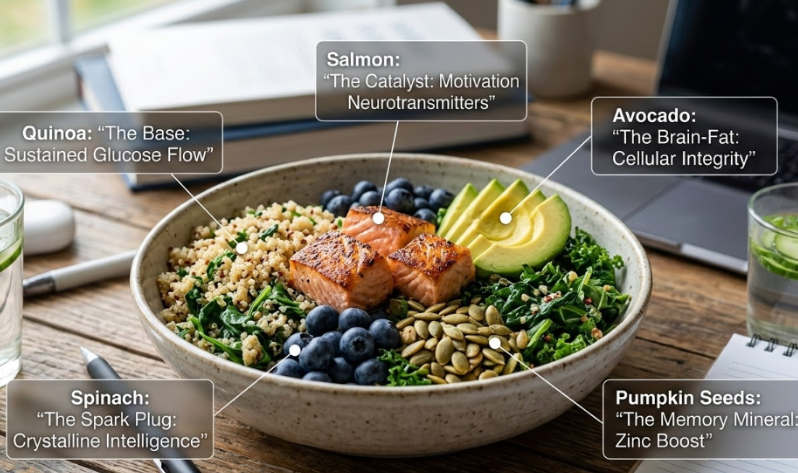
Prep time: 5 mins | Cook time: 10 mins | Serves: 1
Ingredients:
- 1/2 cup pre-rinsed Quinoa: (Quick-cooking and protein-packed).
- 1 cup baby Spinach or Kale: (Massaged with a little salt to soften).
- 4 oz Salmon fillet (or 1/2 cup Smoked Tofu): (High in B12 and protein).
- 1/2 Avocado, sliced: (The ultimate brain fat).
- 1 tbsp Pumpkin seeds (Pepitas): (Rich in Zinc for memory).
- 1/4 cup Blueberries: (Optional, for a burst of antioxidants).
- Dressing: Lemon juice, olive oil, and a pinch of turmeric.
Instructions:
- Boil the Base: Place quinoa and water (1:2 ratio) in a pot. Bring to a boil, then cover and simmer. It will absorb all the water in about 10-12 minutes.
- The Quick Sear: While the quinoa simmers, season your salmon or tofu with salt and pepper. In a small non-stick pan, sear for 3-4 minutes per side until crisp.
- The Assembly: While the protein rests, toss your greens in the lemon-turmeric dressing. Turmeric is a powerful anti-inflammatory that helps with mental clarity and reduces “brain fog.”
- Plate and Power Up: Fluff the quinoa with a fork, place it in a deep bowl, and top with the protein, greens, avocado, and seeds.
Beyond the Bowl: Managing Cognitive Load
Diet is a foundational element, but it is only one part of the academic success equation. To truly rank at the top of your class, you must manage your “cognitive load”—the total amount of mental effort being used in the working memory. When your brain is bogged down by the stress of formatting citations or struggling with a difficult coding syntax, your “processing power” for actual learning decreases.
This is where strategic delegation becomes a superpower. High-achieving students often use a mix of healthy living and external resources to stay ahead. By outsourcing the more tedious or technically frustrating aspects of their work, they free up mental bandwidth to engage deeply with their subject matter. This holistic approach—feeding the body correctly and supporting the mind with the right tools—is the hallmark of a successful 2026 academic strategy.
The Role of Hydration and Micronutrients
You cannot talk about brain fuel without mentioning water. Even 2% dehydration can lead to a significant drop in concentration and memory retention. To complement your Brain-Power Bowl, pair it with a tall glass of water infused with cucumber or mint. Avoid the “liquid calories” found in sodas, as the sudden influx of sugar will counteract the slow-release benefits of your meal.
Furthermore, micronutrients like Zinc and Magnesium play a crucial role in how our neurons communicate. Pumpkin seeds are an excellent source of Zinc, which is vital for enhancing memory and thinking skills. Magnesium, found in leafy greens, helps regulate the nervous system and can reduce the “test anxiety” that many students feel before a big submission.
Maximizing the “Afterburn” Effect
The benefits of a Brain-Power Bowl don’t stop once the study session is over. Because you’ve avoided the sugar crash, your brain is in a better state for “memory consolidation” during sleep. When you eat poorly, your body spends the night dealing with inflammation and blood sugar regulation rather than processing the information you learned during the day.
By eating for your brain, you are essentially making your study hours more “profitable.” You learn more in less time, and you remember it longer.
Conclusion: A Lifestyle, Not a Quick Fix
Ranking on the first page of your own life requires consistency. One healthy meal won’t save a semester of poor habits, but a consistent routine of nutrient-dense eating will transform your baseline performance. As you navigate the complexities of university life, remember that you are an elite mental athlete. Your “sprints” deserve the best fuel available. By mastering the 15-minute meal, you reclaim your time, protect your health, and set the stage for academic excellence that lasts long after graduation.
Frequently Asked Questions
How does a “brain-power bowl” improve study focus?
These meals utilize low-glycemic bases and healthy fats to provide a steady stream of glucose to the brain. This prevents the energy crashes associated with sugary snacks, allowing for sustained concentration during long academic sessions.
What is the best time to eat before a deep-work session?
For maximum effectiveness, consume your meal approximately 30 to 45 minutes before starting. This allows your body to begin the digestion process, ensuring nutrients are entering your bloodstream just as you begin your most intensive tasks.
Can these meals be prepared on a strict student budget?
Yes. By focusing on versatile staples like quinoa, spinach, and plant-based proteins like chickpeas or lentils, you can achieve the same cognitive benefits at a fraction of the cost of processed convenience foods.
Why are Omega-3 fats essential for learning? Omega-3 fatty acids are structural components of brain cell membranes. They facilitate better communication between neurons, which is vital for memory retention and the processing of complex new information.
About The Author:
Min Seow is a dedicated contributor at myassignmenthelp, where I focus on bridging the gap between student wellness and academic performance. With a passion for lifestyle optimization and research-driven strategies, I provide practical insights to help students navigate the complexities of university life with confidence and clarity.